Part Four: Pathways to Success
The faculty at St. Joe’s Academy gives students hope for a better future.
Story By: Tiffany White
The academic progress of many foster children suffers, because they change homes and schools often. For some, the instability also can negatively affect their behavior, which prevents them from attending a community school. To mitigate the barriers, St. Joe’s created St. Joe’s Academy, our on-campus school for those children who need additional help with life skills.
Many of our kids attend the academy while others attend Jefferson County Public Schools off campus. All classes are taught by JCPS teachers, and St. Joe’s Academy follows the school district’s curriculum. Seventy-six percent of our students have a learning disability due to trauma, but the faculty at St. Joe’s Academy is relentless in ensuring every child is recognized – and feels a sense of accomplishment. They want their students to see how much they’ve evolved during their time here, whether it is academically, behaviorally, or socially. As one of our educators noted, “They are important children no matter where they are. They should all be celebrated. A lot of the time they are not because of their situation, so knowing they are appreciated and celebrated is important to them.”
School begins at 7:55 a.m. and ends at 2:28 p.m. for on-campus students and our off-campus students return to the cottages between 4:30 p.m. and 5:30 p.m. Before class, students have a 30-minute social emotional learning session designed to help them develop social awareness, problem-solving skills, and self-regulation. Using this educational approach is instrumental in preparing our kids for success in academics and relationships. Typical class sizes are 10-12 students per class ranging in age from 6-16. The highest number of students are between the ages of 10 and 14. Each student shares their goals for the day and are encouraged to call on their peers and teachers when they need extra support. “My favorite subject is science mainly because of my teacher Mr. Tony. He is the best teacher I’ve had. He doesn’t push our limits with schoolwork, and he listens to everything we say and never interrupts us or judges us,” says one of our SJ kids.

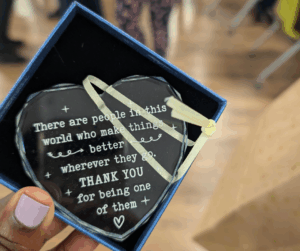
One of our SJ kids gave this gift to their teacher at this year’s awards ceremony for the students.
If a student is struggling either academically or socially, they can take a time-out at their desk or go to a designated break area located in the classroom for more privacy. They also have the option of taking a 5-minute break outside of the classroom, or they can go to the refocus room – a safe place for calming down. “There are a lot of emotions in a residential center, and it’s important to have a room like this,” says one resident.
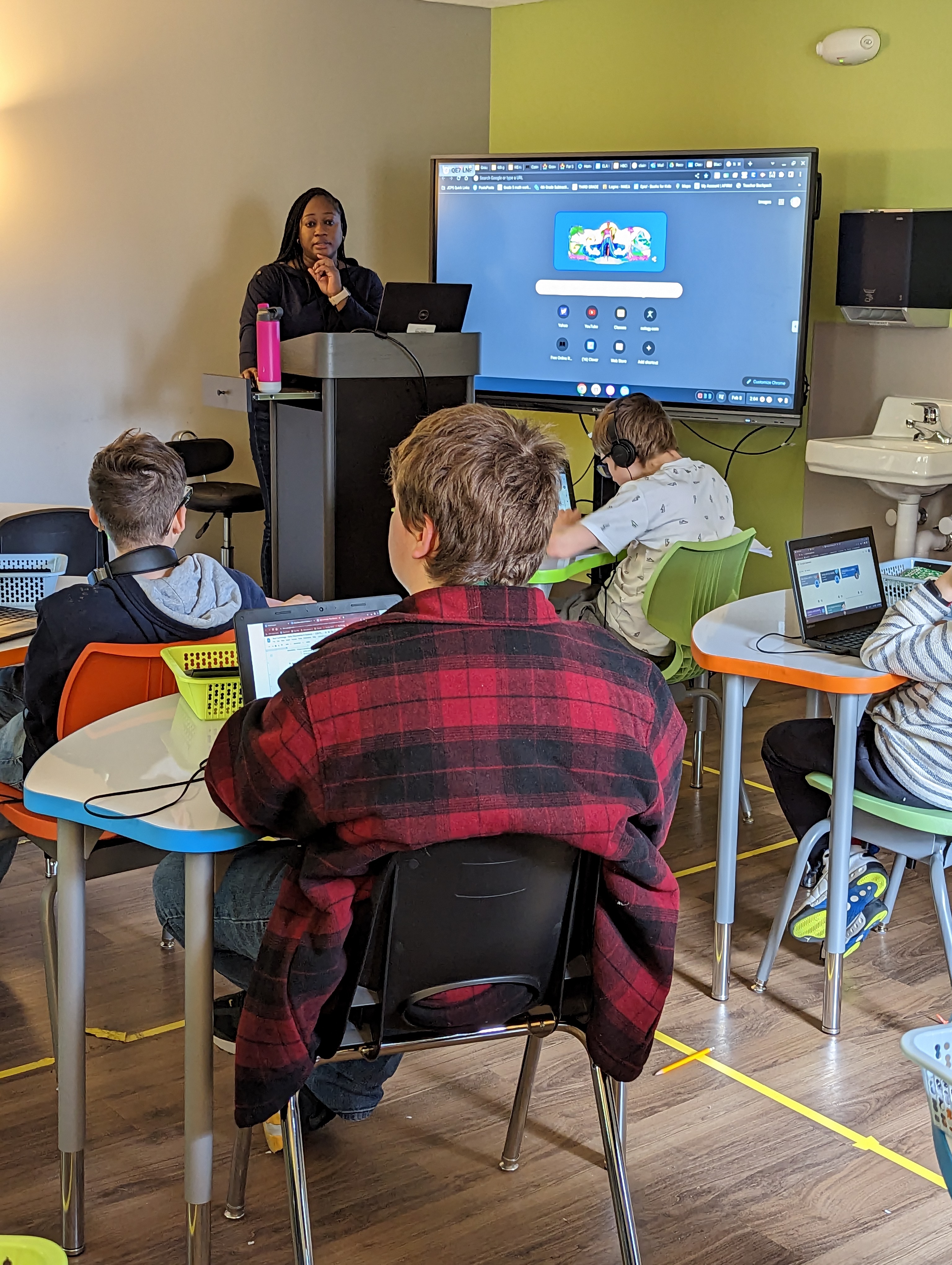 Extracurricular activities are also part of their weekly schedule. Every other Friday afternoon students can play board games, read, or work with Legos. And on Wednesdays, they can have free time in the gym depending on their behavior.
As part of the JCPS curriculum, our students participate in Journey to Success, an educational component aimed at empowering kids through self-reflection. Each year, students share what they’ve learned and upload memorable school projects to what is referred to as a digital backpack which can be viewed later. Being able to see their personal growth over time is empowering – particularly for those children who are often discouraged.
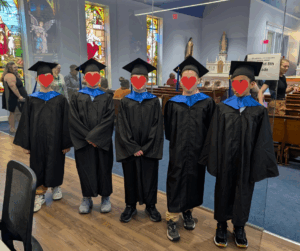
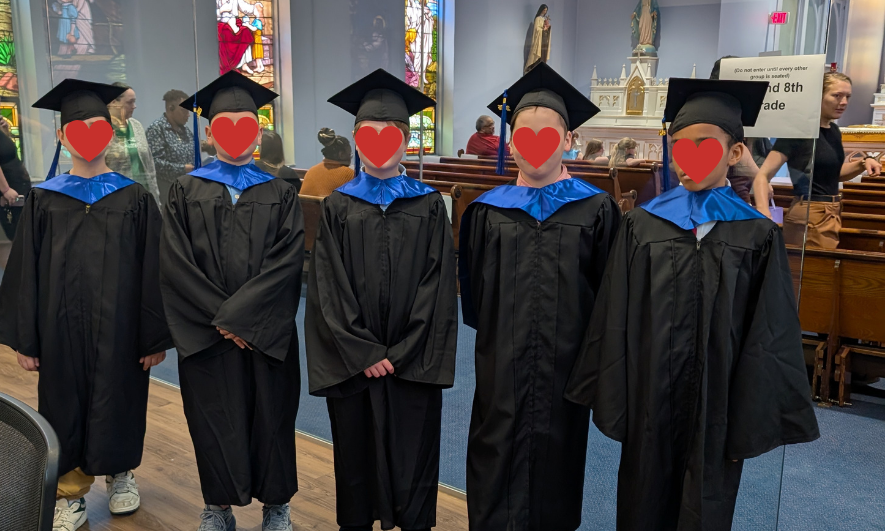
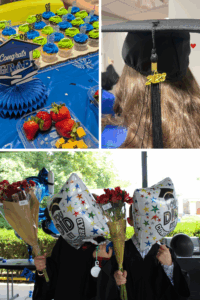
At the end of the school year, Joann Childers, Activities Coordinator at St. Joe’s and members of our residential team, plan an awards ceremony for the kids which also includes a balloon photo backdrop. “It is a fun time for them, and seeing so many happy faces warm my heart,” she says.
In our last installment of “A Day in the Life of a SJ Kid,” we’ll be sharing the success stories of some of our St. Joe’s families.
ICYMI: Read Part Three of “A Day in the Life of a SJ Kid.”
This post was supported by funds made available by the Kentucky Department for Public Health’s Office of Health Equity from the Centers for Disease Control and Prevention, National Center for STLT Public Health Infrastructure and Workforce, under RFA-OT21-2103. The content of this post are those of the authors and do not necessarily represent the official position of or endorsement by the Kentucky Department for Public Health or the Centers for Disease Control and Prevention.