

Story By: Tiffany White
“I like the butterfly, because when I arrived at St. Joe’s, it reminded me that first you are a caterpillar and then you change into a butterfly and that makes me feel happier, because it shows how much I have grown,” says 14-year-old *Jaime, who is in the residential program at St. Joseph Children’s Home. There are over 8,600 children living in out-of-home care based on the recent 2025 Foster Care Facts report published by the Cabinet for Health and Family Services. All of these children have been removed from their home because of abuse or neglect, but child welfare organizations like St. Joe’s are here with outstretched hands ready to help. In our five-part series, we will learn about how the St. Joe’s support team grooms foster children for success starting from day one.
Part One: “We Want Them to Feel Safe Here.”
How our SJCH team makes the transition from home easier for our new residents.
Loss is a common experience shared by kids placed in foster care. Despite the negative circumstances of their home life, being separated from their parents – and sometimes siblings – makes coping painstakingly difficult. Jeannette Fisher, Admissions and Healthcare Coordinator at St. Joe’s, is the first face kids see when they are admitted into our residential program.
Oftentimes, making the transition is scary for them, but she lets them know they are never alone. Jeannette arranges all of their medical appointments and communicates with our occupational, physical, and speech therapists. She transports kids to appointments and provides them with onsite care if they are ill or have injured themselves.
Jeannette also handles state referrals and works with the Department of Child Based Community Services to arrange admissions. “If they come in angry, I stay calm and try not to overtalk. I give them space. I talk to them calmly and let them know their feelings are valid. A lot of times they are riddled with anxiety and are scared but I ask them if they have any questions. They usually say they don’t, but I also encourage them to let me know when they do so that I come back and talk with them. I let them know that we want them to feel safe here.”
Skylar Gilmore, an onsite therapist at St. Joe’s who counsels the teenage boys in residential, echoes this sentiment. Creating a homelike atmosphere, she says, is the first step in making them comfortable. She ensures that each room has a bedspread, blanket, rug, and bean bag along with some personal touches. “I read their referral and figure out what their interests are, then I pick a couple of toys for them to have in their room based on this.”
The children are encouraged to draw artwork they can place on their bedroom walls – sometimes it represents their goals and serves as a reminder for them and the staff. “My room is decorated with black polka dots, and I have a motivational wall that I look at daily, which inspires me and helps keep me focused. I also have pictures of all my favorite artists on my door. My room is well-organized. I keep my makeup in one place, and I store my purses and shoes together. Overall, my room is peaceful,” says *Julie, one of our SJ kids.
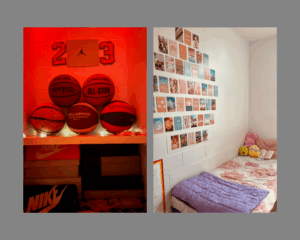
The cottages, located on the St. Joe’s campus, are where our children live. There are four cottages with 12 children living in each building under the supervision of trained staff. Every cottage includes a thoughtfully designed shared space where the children dine, socialize, and participate in activities together.
When a child needs quiet time, they can unwind in the reflection/refocus room. These rooms have a sensory wall designed with tactile surfaces kids can touch to help them de-escalate and regulate their emotions. Some sensory walls have photos illustrating various coping skills the kids can look at when they are upset. Other common items found in these rooms are fidget toys, weighted blankets, bean bags, and LED lighting. “The goal is to have a safe area where they can go when they may need some time to regulate their emotions. There is no door to these rooms, which allows staff to maintain appropriate supervision of them, while also giving them some space,” says Cortney Emberson, Director of Clinical Services.
In Part Two of “A Day in the Life of a SJ Kid,” we will be speaking with one of our onsite therapists about the strategies she uses for helping our SJ kids heal from their trauma and gain independence. Follow us on our social channels to read the story and subscribe to SJ Stories, our blog, to automatically receive each installment in your inbox.